
The Shade Debate: Room Darkening vs Blackout Shades
If you’re planning a home redesign or remodel, decisions about window treatments are more important than you think. That’s because these are among the final decisions that affect everyone's comfort in your home. Picking the wrong option can leave a room feeling either too bright and exposed or unnecessarily closed off.
If you’ve been shopping for new shades or blinds, terms like room-darkening and blackout sound interchangeable, but they aren’t the same thing. At Rebarts Blinds and Shades, our team is here to offer you options, and we know that one opacity choice does not suit everyone’s room or needs.
Let’s start by defining both and describing the benefits. Then, we’ll get to the good part: The most exciting styles available in both categories.
The Differences Between Room Darkening vs. Blackout Shades
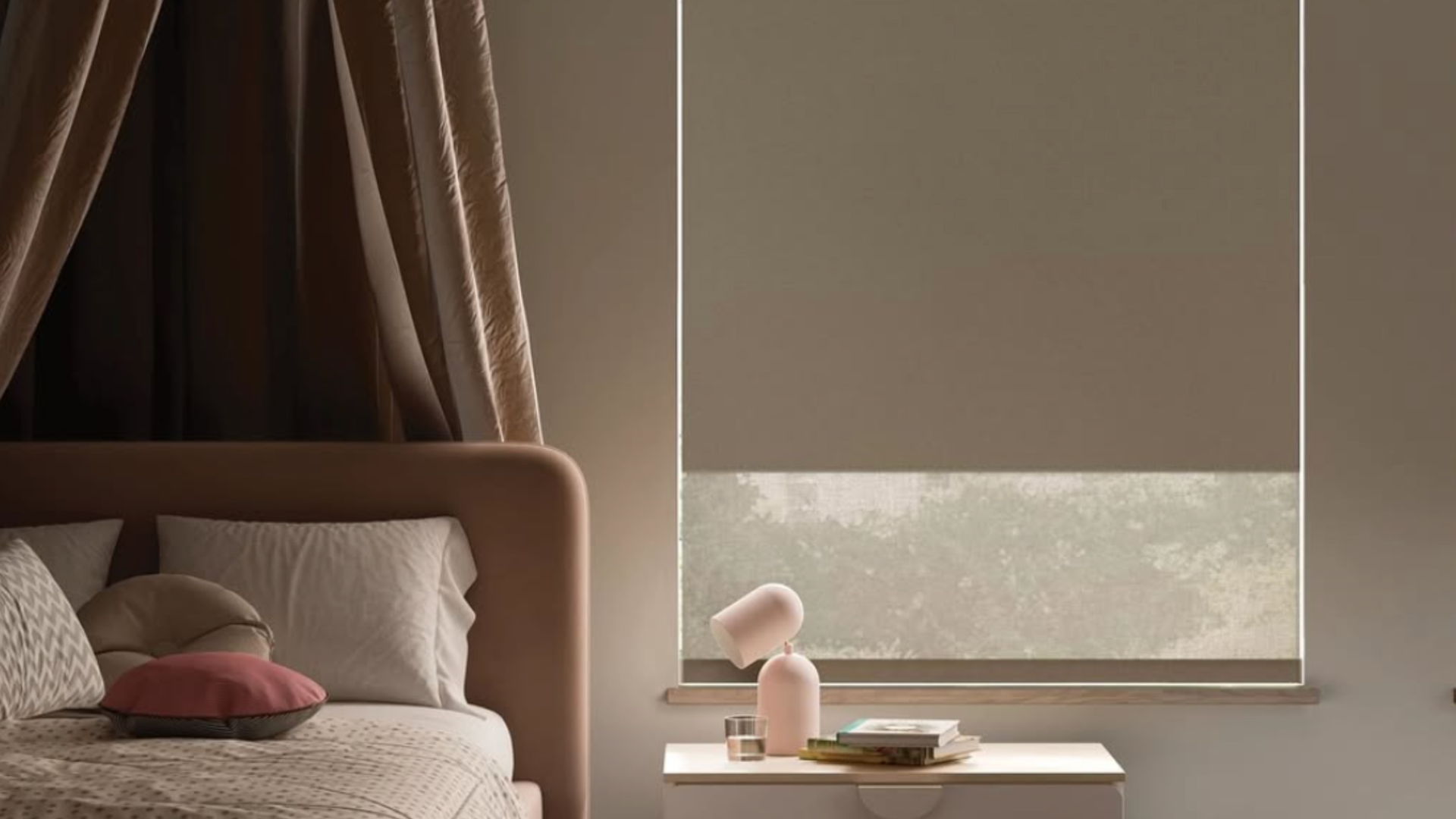
Room-darkening shades block most light but allow some to filter through, usually along the edges where the shade meets the frame. That design makes a space noticeably dimmer without achieving total blackout. They're a solid choice for living areas, dining rooms, and bedrooms where privacy matters but a pitch-black room isn't the goal.
- Learn more about some of our favorite room-darkening shades.
Blackout shades go further. The best systems combine dense fabrics with options like side channels or tracks that seal edge gaps, eliminating nearly all incoming light. That level of control is a game-changer for shift workers, light sleepers, light-sensitive babies or kids, and media rooms where even a sliver of sunlight affects picture quality.
The bottom line:
- Room darkening dims light.
- Blackout blocks light.
Now, you can make the right choice and avoid an expensive do-over.
Hunter Douglas Room Darkening vs. Blackout Shades
We proudly partner with Hunter Douglas to offer these stunning, practical window shades:
Duette® Cellular Shades
These bedroom window treatments offer unmatched insulation and light control. The honeycomb structure traps air between layers for temperature regulation and sound absorption.
The Duette® Cellular Shades fabric selection offers room-darkening opacities, but you can upgrade to these:
- Duette® Cellular Shades with LightLock™ system has U-shaped side channels that blend into the window frame, absorbing or deflecting almost all incoming light.
- Duolite® is a dual shading system that combines one light-filtering and one room-darkening shade into a single window treatment.
Alustra® Woven Textures® Roman Shades
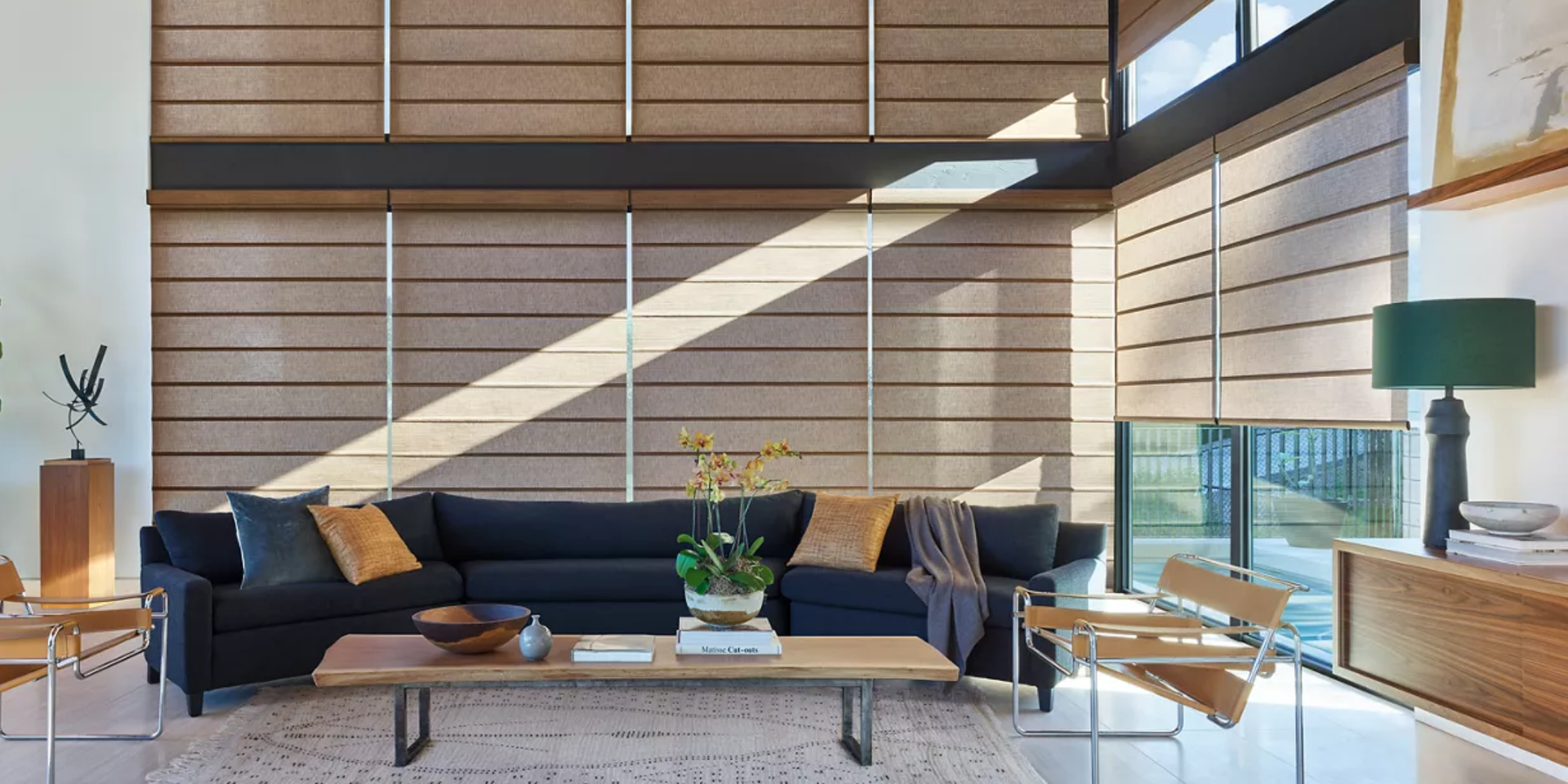
This woven shade has a Roman shade profile, but features the finest natural materials sourced by Hunter Douglas. Its organic personality brings a feel of nature indoors, and its natural fibers are surprisingly durable. Alustra® Woven Textures® Roman Shades also comes with an optional independent liner housed within a single shade’s headrail. It operates independently of the shade, for varying levels of light and privacy throughout the day.
Alustra® Woven Textures® Roller Shades
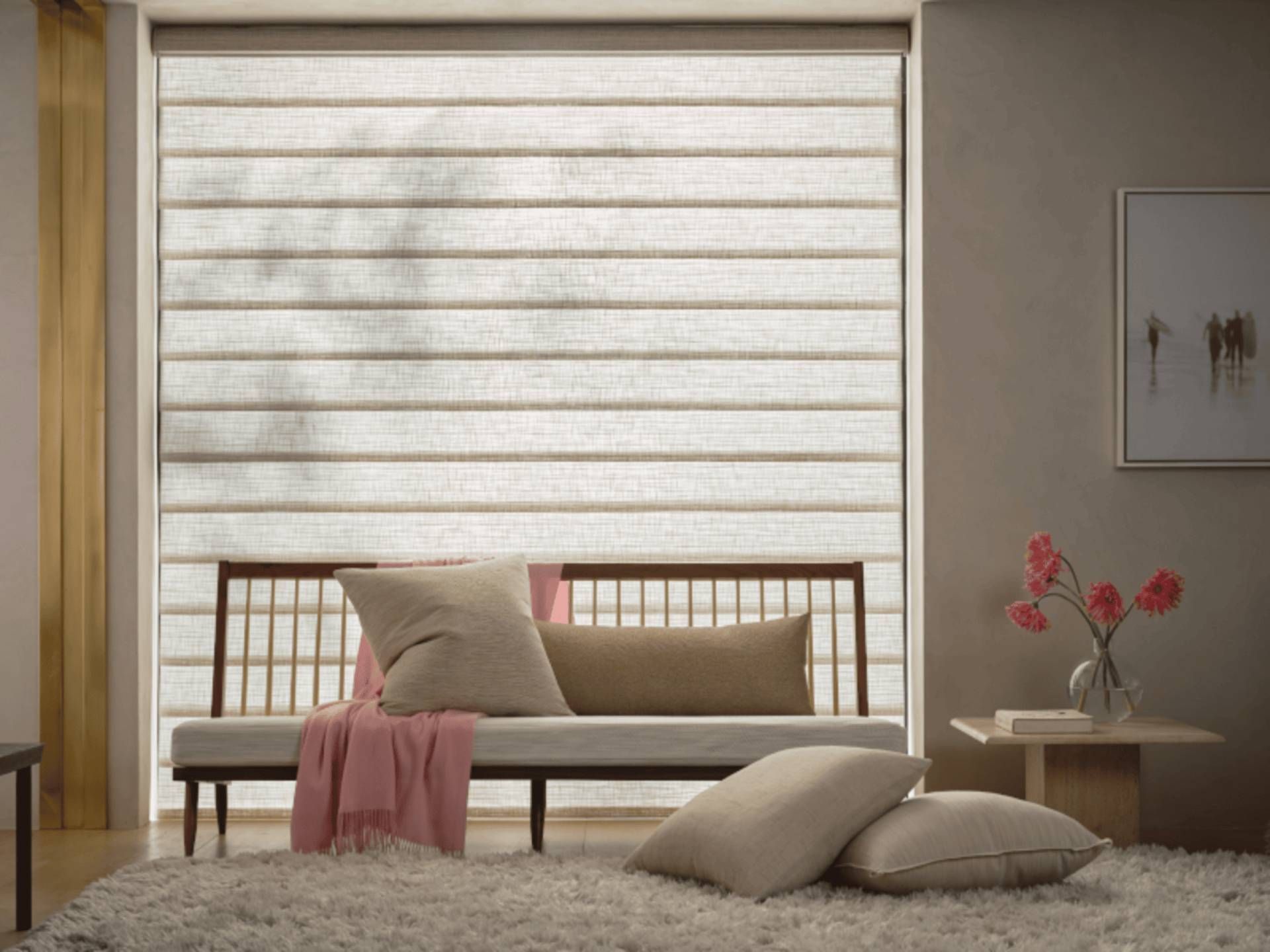
Also crafted with natural fibers, Alustra® Woven Textures® Roller Shades are also woven, but with a flat profile for a streamlined appearance. Its dual roller feature has two shades together, with one positioned in front of the other. Choose any two Designer Roller or Designer Screen fabrics, one for the front and one for the back; the rear one comes in a light-filtering or room-darkening liner. You can also add additional light blocking on one roller with Duolite®.
See the Full Line of Hunter Douglas Products at Rebarts
The room-darkening vs. blackout debate is just one piece of this puzzle — we also factor in operating systems, colors, patterns, and fit during your custom design consultation.
Visit our showrooms in in Burlingame, Los Altos, Menlo Park, San Carlos, or contact us for a consultation. We proudly serve the Bay Area with custom window coverings.