
Window Covering Options That Layer Together
A fully finished design scheme is harder to achieve than most people expect—a bare blind or shade, however well it works, rarely holds true design appeal.
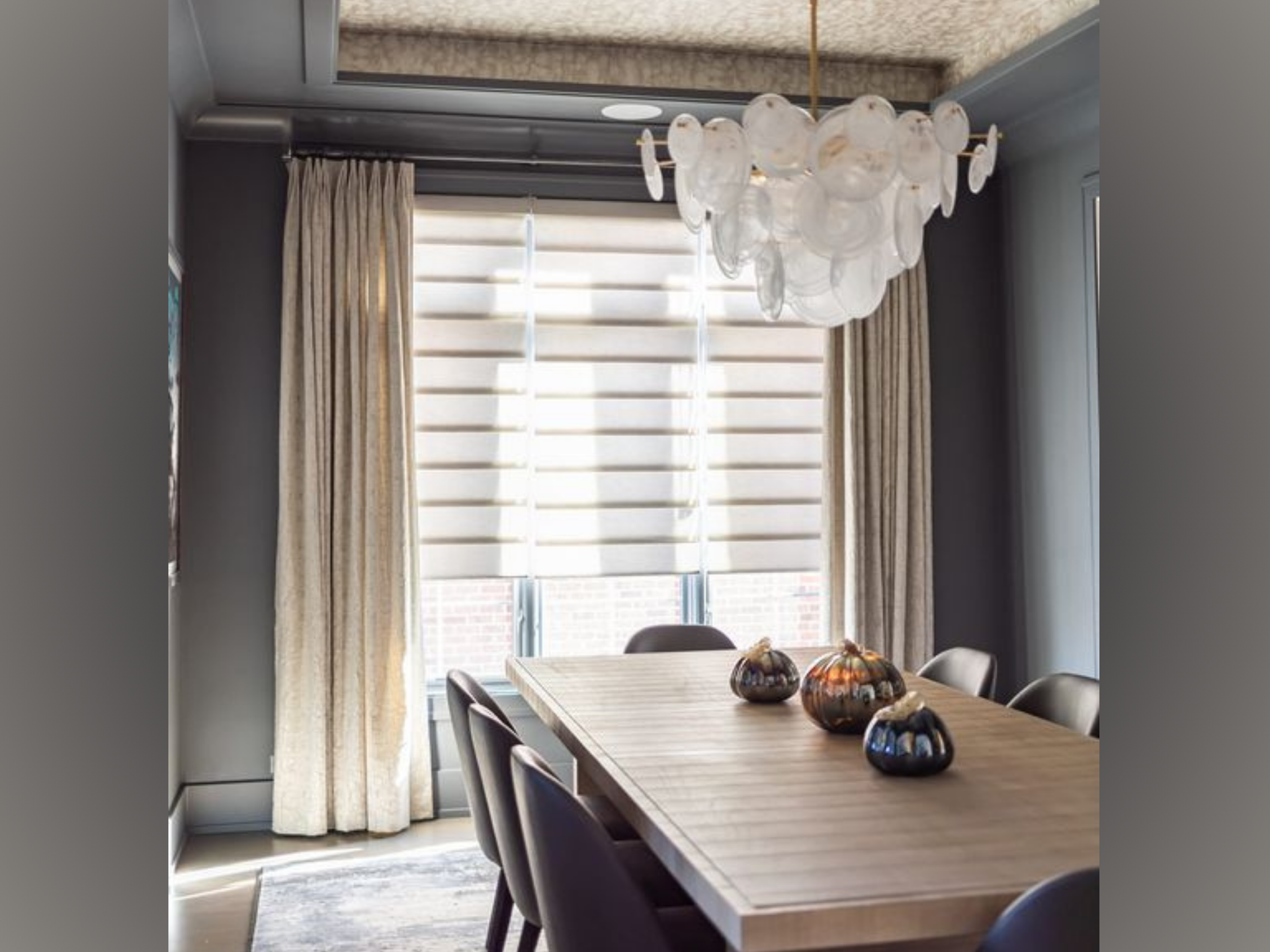
Our design experts at Rebarts Blinds and Shades have a keen eye for finishing any interior with the art of window treatment design. We put our design experience and talent to work by showing clients how to layer the best drapery and shade with finesse.
These combinations add visual depth, soften the hard lines of a window frame, and give you more control over light and privacy.
Why Layering Drapes and Blinds Together Works So Well
Blinds are window coverings with horizontal or vertical slats that tilt, open, and close; they bring a clean, structured look that works well in almost any room.
- In home offices, pairing wood blinds with tailored drapes creates a structured, professional look and combats screen glare.
- For high-traffic areas like kitchens and bathrooms, combining moisture-resistant faux wood blinds with lightweight, washable drapery balances clean lines with welcoming softness.
Layering drapes and blinds together means you get a window that performs well and looks like something a professional designer signed off on.
The Best Drapery and Shades Combinations to Consider
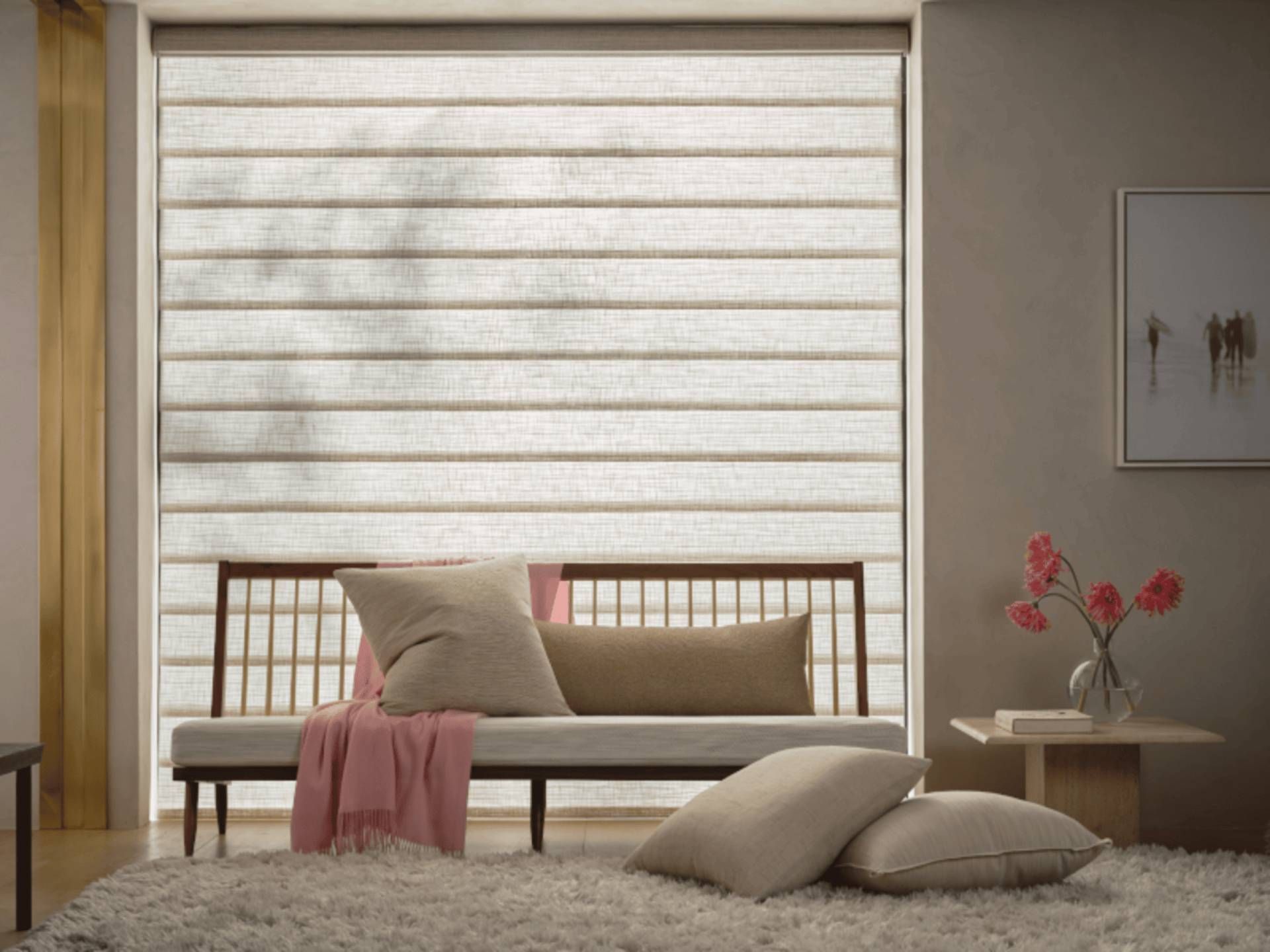
Shades feature fabric panels in different materials and styles.
- Pairing roller shades with floor-length drapery is an interesting layered window covering option for living rooms and bedrooms; the fabric filters or blocks light, while the drapery adds weight, warmth, and dimension.
- Cellular shades are another strong candidate for layering because their clean, sophisticated profile doesn’t add visual bulk to detract from drapery.
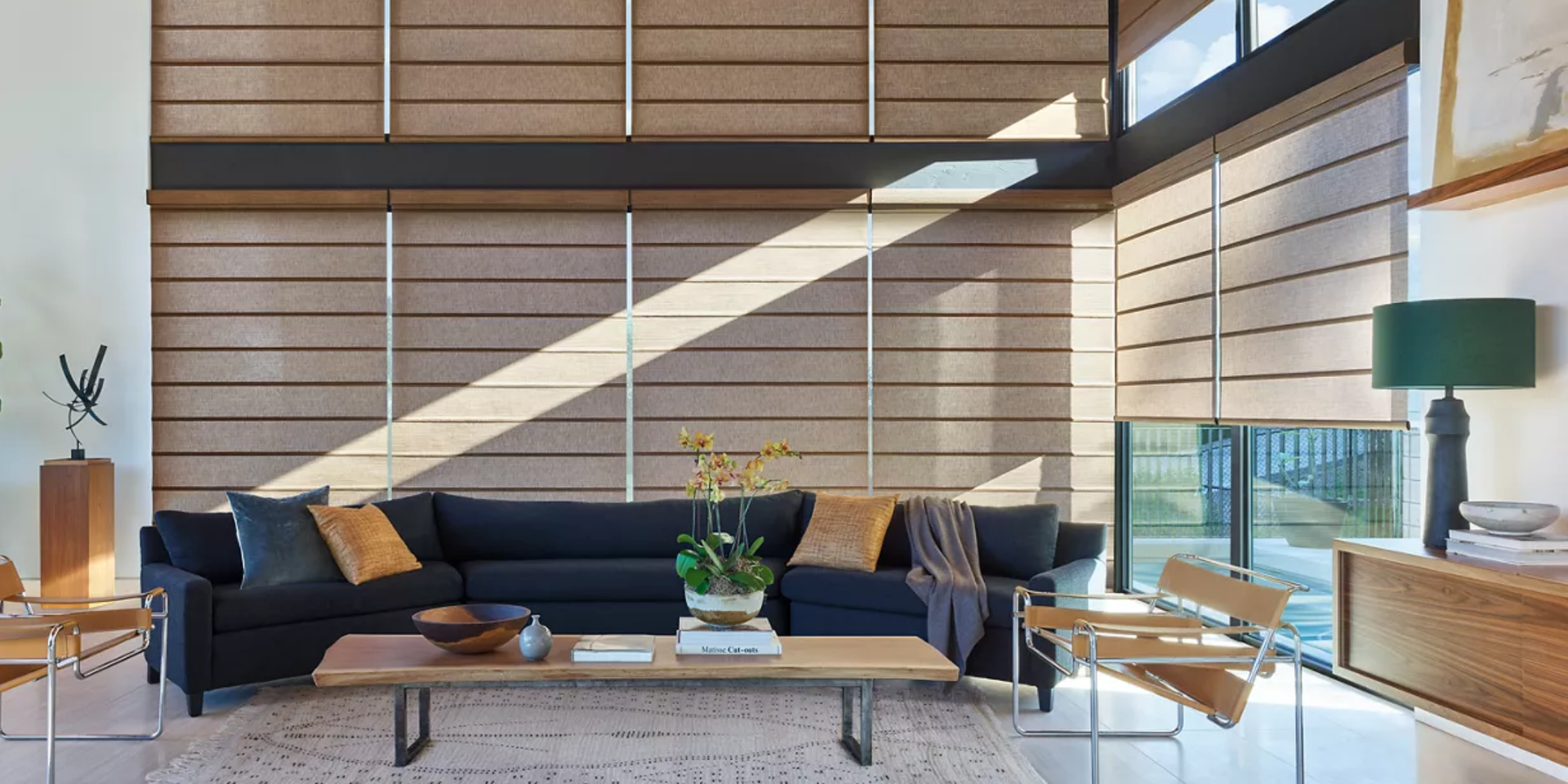
- In dining rooms and formal spaces, woven wood shades paired with velvet or textured drapes strike a balance between organic beauty and practicality.
How to Layer Without Overwhelming the Window
Getting the proportions right makes the difference here. We don’t suggest layering on small windows; that makes them appear overdone. These are some more tips:
- Mounting drapery panels close to the ceiling, rather than directly above the window frame, creates the illusion of height.
- The panels should be wide enough to stack completely off the glass when open.
- Choosing drapery in a color one or two shades deeper or lighter than the wall keeps the layered look cohesive.
- The best drapery and shades pairings share at least one element that ties them together visually, such as texture, tone, or material.
- Keep hardware finishes consistent throughout the room. Match curtain rods to light fixtures or cabinet pulls to give the window treatment a more finished feel.
And remember this: Accurate measuring and flawless installation matter just as much as the window treatments you select. Properly hung layers make every element work better together.
Don’t Settle for One Layer When Two Do the Job Better
A well-layered window separates a room that looks decorated from one that looks designed. At Rebarts Blinds and Shades, we work with homeowners to find window covering options that fit the room, the budget, and the way the space is used.
Visit one of our 4 showrooms in Burlingame, Los Altos, Menlo Park, & San Carlos or contact us for a consultation in our showroom or from your home or location in the Bay Area.